Separate Grand Rapids materials, stains, and expectations
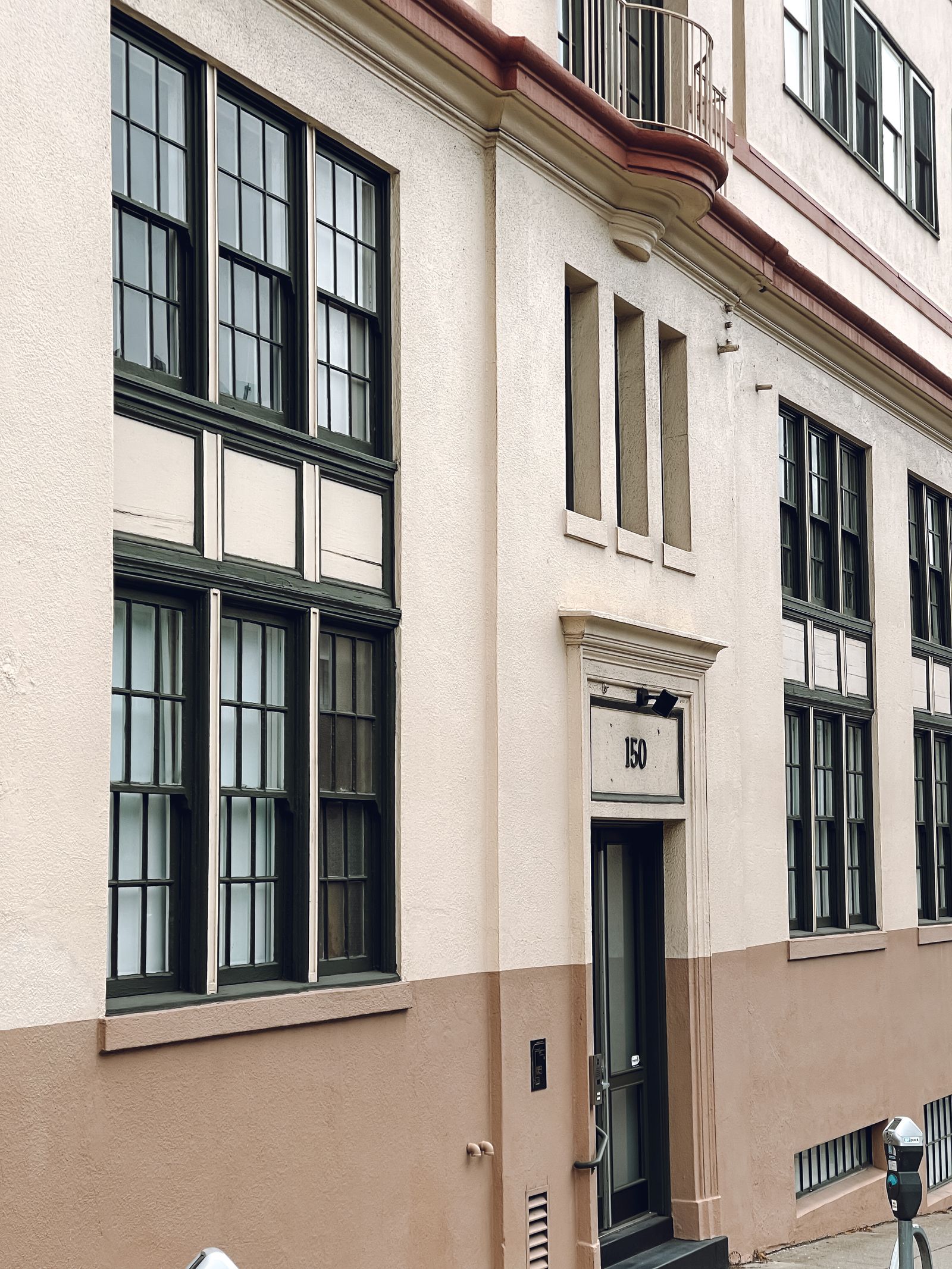
West Michigan commercial properties commonly combine brick, block, precast concrete, cast stone, glass, painted metal, EIFS, stucco, canopies, signs, and repaired joints. A historic Downtown facade may have older mortar and storefront glazing beside newer additions. A manufacturing building near Alpine Avenue or 36th Street may have loading walls, traffic residue, and equipment close to the exterior. A healthcare or office campus can have broad entrances, covered walks, landscaping, and sensitive air intakes. We divide the property into material and exposure zones before selecting chemistry, pressure, dwell time, rinse volume, or access.
Soft washing can help with compatible algae, mildew, light organic growth, and atmospheric film. It does not repair cracked masonry, failed sealants, spalled concrete, corrosion, damaged coatings, active leaks, or moisture behind a wall. A dark mark may be biological growth, soot, salt, mineral residue, oxidation, or an existing shadow from damage. We identify the likely condition, test where appropriate, and describe the improvement that is realistic. Glass restoration, construction residue removal, graffiti treatment, specialty stain removal, or facade repair should be named separately rather than hidden inside a routine cleaning promise.
- Divide brick, stone, concrete, glass, metal, EIFS, stucco, and painted zones.
- Distinguish organic growth, road salt, pollen, traffic film, minerals, and oxidation.
- Define whether the goal is maintenance, a visible facade reset, or detailed finish work.
- Keep repair, leak diagnosis, coating replacement, and restoration outside a standard wash scope.
Work around healthcare, manufacturing, hospitality, and retail
Grand Rapids properties are active well before a cleaning crew arrives. Medical buildings near Michigan Street may need protected entrances, accessible routes, patient drop-off lanes, and careful control around air intakes. Manufacturers and warehouses along US-131, 28th Street, and the industrial corridors may have forklifts, deliveries, employee parking, and sensitive production areas close to the wall. Hotels near Gerald R. Ford International Airport and Downtown need clean arrival zones without spray, hoses, noise, or controls disrupting guests, luggage, breakfast, or shuttle movement. Retail centers need safe customer paths, storefront protection, and clear timing around deliveries and peak shopping.
The work may be divided by elevation or entrance, scheduled after a delivery window, or performed before a clinic opens. Facilities teams should identify events, tenant notices, outdoor seating, parking controls, access badges, emergency routes, and sensitive equipment before a date is selected. A named site contact should be able to pause work if a patient, customer, employee, vehicle, or unexpected truck enters the controlled area. The point of a good cleaning plan is to improve the building without making the operation carry avoidable disruption.
Plan for lake-effect snow, freeze-thaw, and spring pollen
Grand Rapids weather changes the facade and the work plan. Lake-effect snow and winter moisture can leave deicing residue near parking entrances, garage approaches, loading areas, and lower walls. Freeze-thaw cycles can expose open joints, fragile coatings, and damaged concrete to additional water risk. Spring pollen can leave a yellow-green film on ledges, canopies, signs, and glass, while shaded elevations may retain moisture and organic staining longer. Summer humidity and storms can change drying and runoff conditions quickly.
Salt residue is not the same as algae, and a soft-wash chemistry designed for organic growth may not remove every bonded mineral or oxidation mark. We consider temperature, wind, precipitation, lightning, surface moisture, ground conditions, and the forecast before setup. A date is a target window, not permission to work through unsafe conditions. If a walkway could freeze, wind could move spray outside the controlled zone, or a storm changes the water path, pausing and rescheduling is part of a responsible plan.
Use drone assistance only where the site supports it
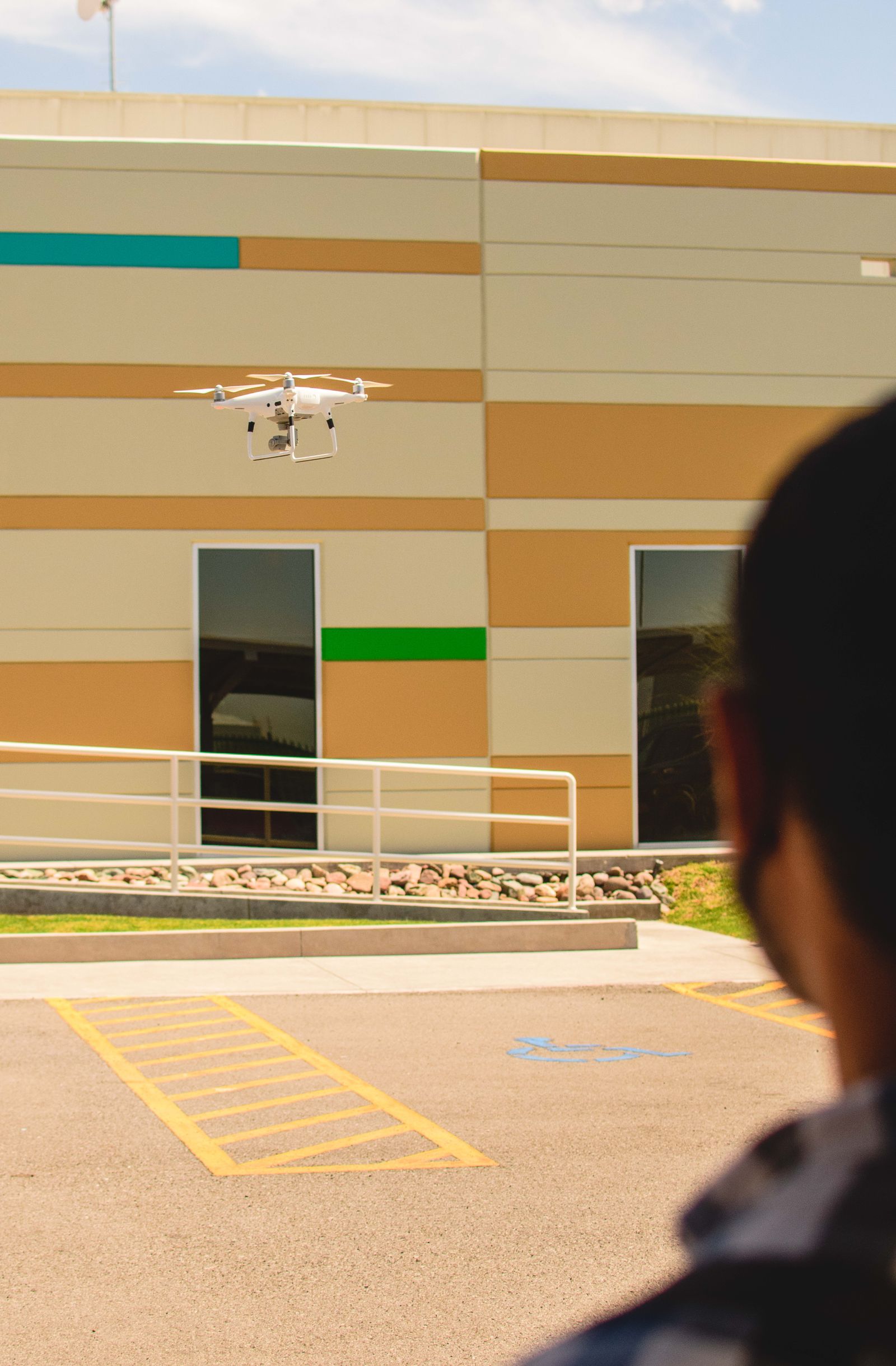
Drone-assisted application or rinsing may reduce lift placement on selected upper facade zones, but building height alone does not establish feasibility. The address review should consider wind, wires, trees, balconies, roof equipment, adjacent structures, launch and recovery space, visual line of sight, public movement, and the ability to keep water away from patients, guests, vehicles, intakes, and neighboring property. Downtown activity, airport surroundings, stadium events, heliports, and temporary site restrictions can affect the proposed flight plan.
Commercial drone operations must follow applicable Federal Aviation Administration requirements and any necessary airspace authorization. Property permission is needed for access but does not replace aviation compliance. If a facade is too close to people, equipment, wires, or another structure, a lift, water-fed pole, roof-access method, hand detail, hybrid approach, or later work window may be better. Our proposal identifies where drone support is expected to help and where it is not a substitute for contact cleaning, repair review, or inspection.
Build Grand Rapids drainage and water management into the scope
Water can move from an upper wall into gutters, downspouts, pavement joints, planted beds, curb lines, floor drains, storm inlets, and neighboring low points. The visible drain below a facade is not automatic permission to send wash water into it. Before work, the property team and contractor should identify water access, hose routes, low points, landscaping, doors, electrical equipment, air intakes, vehicles, public paths, and adjacent parcels. The chemistry and rinse volume should match that path, with diversion, protection, reduced flow, collection, recovery, or another approved control considered where required.
Grand Rapids sites may include landscaped medical campuses, structured parking, river-adjacent parcels, bioswales, loading courts, tight sidewalks, and sloped lots where a small change in grade sends water somewhere unexpected. The plan should name who confirms drainage requirements and what happens if observed flow differs from the initial review. At closeout, temporary controls should be removed, accessible routes should be usable, and finished, deferred, stained, or damaged areas should be documented for the property record.
- Locate drains, low points, landscaping, doors, intakes, vehicles, and sensitive equipment.
- Confirm water access, hose routing, pedestrian controls, and emergency access before setup.
- State the water-management approach and the stop condition if the drainage path changes.
- Photograph completed areas and record deposits, repairs, or contact-cleaning needs remaining.
Request a quote tied to priority elevations and business outcomes
A useful Grand Rapids commercial soft-washing proposal should name the service zones, materials, visible soil, included features, method, intended finish, exclusions, water assumptions, access approach, operating window, weather limits, and closeout documentation. It should distinguish broad facade washing from high-detail glass, hard-water removal, construction residue, graffiti, coating work, masonry repair, and envelope inspection. If drone assistance is proposed, the quote should explain the conditions that must be present and identify elevations where a lift, pole, or hand detail remains necessary.
Send the address, wide and close photographs, approximate height, priority elevations, known materials, preferred dates, water access, and information about drainage. Include clinic hours, tenant restrictions, delivery schedules, guest peaks, customer traffic, parking rules, and event dates when known. We can determine whether a site review, test area, or hybrid access plan is needed and prepare a quote for a one-time improvement, phased priority work, or recurring exterior maintenance. Tell us which entrances and elevations matter most, and we will make the next step specific to the property.